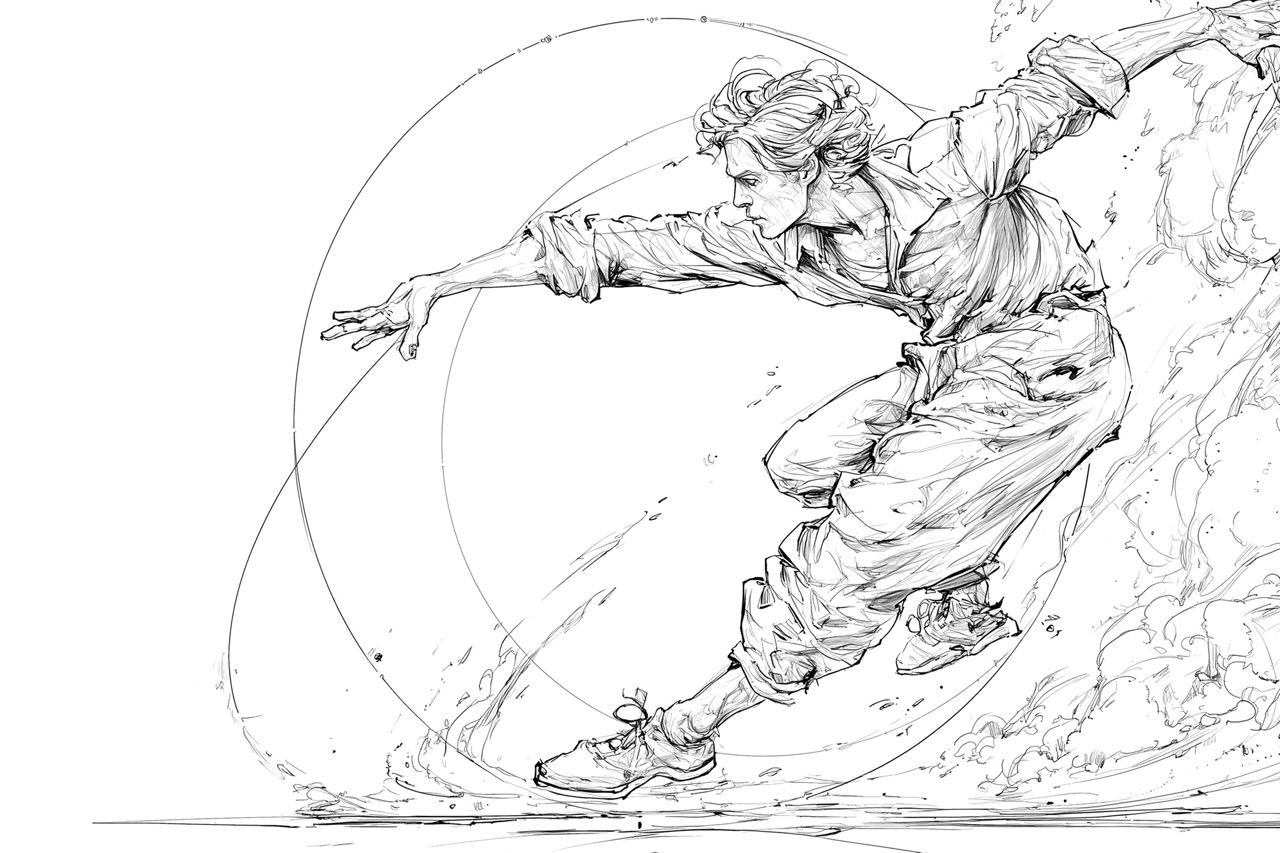
It depends entirely on the level of detail and quality you want to achieve. That's the short answer, and it's the honest one. The long answer is a spectrum that stretches from "a few hours this afternoon" to "a lifetime of practice" — and both ends are equally valid.
You can make something very simple, using online tools and pre-made characters and templates, and produce 2–3 minutes of animation in several hours. It may not win awards, but it will communicate an idea, tell a short story, or explain a process. And that's a legitimate use of animation.
However — and this is the part most people underestimate — doing real feature-quality animation requires skill, talent, and training that very few people master. The gap between "I made an animation" and "I made animation that feels alive" is one of the widest in any creative discipline.
The difficulty scale
Here is an honest breakdown of what each level of animation actually demands in terms of skill, time, and output. This is based on my experience producing animation since 1998 across TV, architecture visualisation, web, and branded content.
Read that last line again. Disney animators are typically expected to deliver no more than 2–3 seconds per day, and that's involving no more than two characters, without cleanup, colouring, or backgrounds. Those seconds are the product of years of training applied with the focus of a craftsman.
"The gap between 'I made an animation' and 'I made animation that feels alive' is one of the widest in any creative discipline."
Why 3D and CGI make it harder, not easier
There's a common misconception that 3D animation is "easier" because the computer does the work. In reality, 3D and CGI are even more complex. Even if you have all the assets modelled, rigged, and ready for motion, sometimes getting to the right "take" requires working with directors, supervisors, and other animators so that your animation fits the shots before and after it.
The technical barrier in 3D is higher at every stage:
In a professional 3D pipeline, every one of these stages involves different specialists reviewing your work. Animation is never created in isolation — it's always part of a larger conversation between departments.
What most people actually need
Here's the practical reality: most people asking "how hard is animation?" don't need to reach Level 04. They need Level 01 or 02. And that's completely fine plus increasingly powerful.
- Brand explainers and social content — template-based animation is genuinely effective today. The tools have matured enormously.
- YouTube and educational content — motion graphics and simple 2D rigging can produce professional results with months, not years, of practice.
- Indie games and web animations — stylised animation with limited frame counts can be learned in a focused year of study.
- Storytelling and short films — this is where real craft begins. Expect 2–3 years of dedicated practice to reach a competent level.
The question isn't really "how hard is it to learn animation?" It's "what kind of animation do I need, and how good does it need to be?" Once you answer that honestly, the learning path becomes clear.
The real investment
If you're serious about character animation — the kind where audiences forget they're watching something artificial — the investment is substantial:
- Observation skills — learning to study how real things move, and why.
- Technical proficiency — mastering your tools so they don't get in the way of your ideas.
- Acting instinct — understanding emotion, intention, and subtext.
- Patience — accepting that great animation is slow by nature, and that the process cannot be meaningfully shortcut.
But don't let that discourage you. Every working animator I know — including the ones at major studios — started somewhere simple. The craft rewards persistence more than any innate gift.

Cinema Illustrated
Master the language of the studio. From keyframes to compositing, 950+ production terms explained visually with beautiful illustrations.

Originally answered on Quora · Expanded and updated March 2026